


In September, the Primorsky Stage of the Mariinsky Theatre presents a lavish chamber programme. The Chamber Hall has vibrant, colorful events in store for connoisseurs of repertoire rarities and enthusiasts of performances for the whole family
In September, the Primorsky Stage of the Mariinsky Theatre presents a lavish chamber programme. The Chamber Hall has vibrant, colorful events in store for connoisseurs of repertoire rarities and enthusiasts of performances for the whole family.
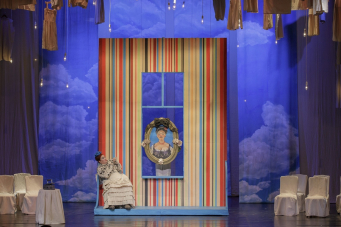
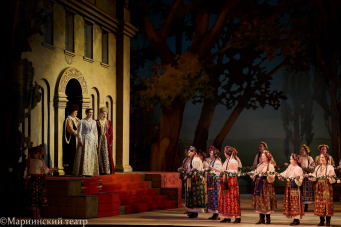
On September 10 and 24, 2026, Mavra, a one-act joke opera by Igor Stravinsky will be performed. The 20th-century composer and reformer considered Mavra one of his finest works. This casual vaudeville is filled with irony, grotesque, the intonations of authentic Russian everyday speech, and features an elegant musical stylization. Despite the comic and lighthearted plot, this opera poses challenges for singers, which makes it a rarity in the musical theatre repertoire.
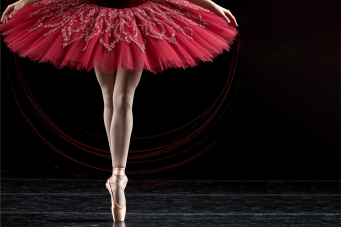
On September 18, 19, and 20, 2026, the Chamber Hall will present the “Ballet Divertissement” programme for the first time. The concert will embrace complex pieces from such classical ballets as The Sleeping Beauty, Swan Lake, La Bayadère, and Don Quixote. The 20th-century choreography will be represented by ensembles from unique Primorsky Stage productions: Romeo and Juliet, La fille mal gardée, Le Corsaire, Carmen Suite, and Vladislav Rzhevsky’s choreographic piece QuintAv, which received recognition at the All-Russian Competition of Ballet Dancers and Choreographers (2025) with a Special Prize for Best Choreography.
Well-loved musical stories for children will be presented in Town Musicians of Bremen (September 12, 2026, 11:00 and 13:00) and The Little Prince (September 26, 2026, 11:00 and 13:00).
These productions have been created specifically to introduce children to musical theatre; they follow the literary sources, vividly bringing to life the characters and their fairytale worlds.
The audiences of the Primorsky Stage of the Mariinsky Theatre are in for a busy September. The first month of autumn is ready to yield a variety of genres and events, from the Cultural program of the Eastern Economic Forum to the premiere of a ballet concert
The audiences of the Primorsky Stage of the Mariinsky Theatre are in for a busy September. The first month of autumn is ready to yield a variety of genres and events, from the Cultural program of the Eastern Economic Forum to the premiere of a ballet concert.
The EEF cultural program will be starting with the traditional performance of People’s Artist of Russia Denis Matsuev, accompanied by the Russian National Youth Symphony Orchestra (September 3). The series of events will continue with a concert from the White Steamship Children’s Music Festival accompanied by the Russian National Youth Symphony Orchestra (September 4), Fikret Amirov’s ballet A Thousand and One Nights (September 5 at 15:00 and 19:00), and a grand production of Giuseppe Verdi’s Aida (September 6).
The second week of September will contain Ruggero Leoncavallo’s Pagliacci (September 9) directed by Golden Mask winner Marat Gatsalov; the Mariinsky Theatre’s iconic production of Adolphe Adam’s Giselle (September 10); Stravinsky’s chamber opera Mavra (September 10); Prokofiev’s joyful opera buffa The Love for Three Oranges (September 11). On September 12 at 14:00 and 19:00, The Firebird ballet will make its comeback to the program after a long hiatus. On September 13, the viewers will enjoy the beloved family opera The Tale of Tsar Saltan.
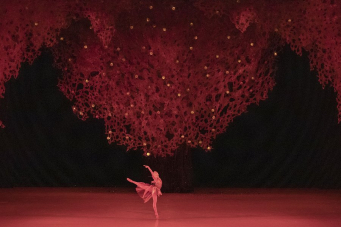
A highlight of the month's program will be the premiere of the Ballet Divertissement concert program, which will be performed three times in the Small Hall of the Theatre (September 18, 19, and 20). In a cozy atmosphere, the troupe will present brightly shining ballet numbers from various eras and styles, from classical heritage to 20th-century works and 21st-century choreography. Duets and ensembles will be performed by leading soloists.
In mid-September, Vladivostok will be hosting the International Pacific Theatre Festival. The Primorsky Stage will be one of its main venues, featuring performances by teams from Mongolia, South Africa, India, and Russia. The first performance in the Great Hall of the Primorsky Stage will take place on September 19. It will be Khan of the Mongols, the first Mongolian production to conquer London’s West End venues.
In the second half of the month, the Far East connoisseurs will see the large-scale romantic ballet Raymonda by Alexander Glazunov (September 24), chamber comic opera Mavra by Stravinsky (September 24), the universally loved lyrical opera Eugene Onegin by Pyotr Tchaikovsky (September 25), the colorful, original production of Fikret Amirov’s ballet A Thousand and One Nights (September 26 at 15:00 and 19:00), and the opera buffa Don Pasquale by Gaetano Donizetti (September 27).
The Eastern Economic Forum will be held in Vladivostok from September 1 to September 4. The entertainment program will be held on the Primorsky Stage of the Mariinsky Theatre, featuring a performance by People’s Artist of Russia Denis Matsuev and a concert from the White Steamship Children’s Music Festival, along with large-scale repertoire performances
The Eastern Economic Forum will be held in Vladivostok from September 1 to September 4. The entertainment program will be held on the Primorsky Stage of the Mariinsky Theatre, featuring a performance by People’s Artist of Russia Denis Matsuev and a concert from the White Steamship Children’s Music Festival, along with large-scale repertoire performances.
On September 3, in the Great Hall of the Primorsky Stage, renowned Russian pianist Denis Matsuev will perform for residents and guests of the Far Eastern capital, accompanied by the Russian National Youth Orchestra. Artem Baskakov, Ekaterina Mochalova, David Tkebuchava, Sofia Tyurina, and Vladimir Syanov will also perform in the concert, conducted by Yuri Medyanik.
On September 4, a concert by the White Steamship Children’s Music Festival, accompanied by the Russian National Youth Orchestra will become a highlight of the EEF 2026 cultural program. The White Steamship Children’s Music Festival is a unique social project embracing 174 talented children of thorny destiny, selected competitively from across Russia. The festival participants prepared the concert program under the guidance of experienced teachers and mentors; these classes set the stage for an extensive tour: the combined children’s choir will perform at the Mariinsky Theatre in St. Petersburg, the Bolshoi Theatre in Moscow, and will be rounding up the concert series at the Primorsky Stage in Vladivostok.
The string of high-profile events of the Eastern Economic Forum cultural program will continue with spectacular performances from the Primorsky Stage repertoire, which have already been successfully presented in Russia and abroad.
On September 5, Fikret Amirov’s ballet A Thousand and One Nights will be performed twice. The production is a “signature card” of the Primorsky Stage, and it has enjoyed successful performances in the capitals of China, Oman, Qatar, and Belarus, and in Russia, earning acclaim from audiences at the Mariinsky and Bolshoi Theatres.
On September 6, the Great Hall of the Primorsky Stage will present Giuseppe Verdi’s grand opera Aida, directed by Honored Artist of Russia Alexei Stepanyuk. In addition to its home stage, the production has also been performed twice at the Bolshoi Theatre of Russia, where it was highly praised by audiences and music critics.
Eldar Aliev, Ballet Artistic Director of the Primorsky Stage of the Mariinsky Theatre, has received the Liaoning Friendship Award. It is the highest regional honor given by the People’s Government of Liaoning Province, China
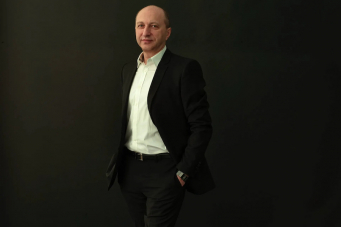
Eldar Aliev, Ballet Artistic Director of the Primorsky Stage of the Mariinsky Theatre, has received the Liaoning Friendship Award. It is the highest regional honor given by the People’s Government of Liaoning Province, China.
The commemorative award, created in 2002, honors international specialists for exceptional contributions to the province’s economic development, technological innovation, and international cooperation.
Eldar Aliev’s creative activity is long and tightly linked to the ballet community of the People’s Republic of China.
Since 2006, the Ballet Artistic Director of the Primorsky Stage has worked as a guest coach and choreographer with Chinese leading companies and at the Beijing Dance Academy. He has often acted as a judge at prestigious ballet competitions in Beijing, Shenyang and other big cities in China. In June 2016, Eldar Aliev was awarded the title of Honorary Professor of the Shenyang Conservatory of Music (China) in the field of dance.
The company of the Primorsky Stage of the Mariinsky Theatre congratulates Eldar Agabalaevich on his international recognition and wishes him further creative achievements.
This week, the Ballet Company of the Primorsky Stage of the Mariinsky Theatre opened its season in Vladivostok, following a triumphant tour in St Petersburg. The company is going to present the already loved and rarely performed repertoire to audiences on their home stage. The highlight of the repertoire will be a premiere of a new concert programme, Ballet Divertissement
This week, the Ballet Company of the Primorsky Stage of the Mariinsky Theatre opened its season in Vladivostok, following a triumphant tour in St Petersburg. The company is going to present the already loved and rarely performed repertoire to audiences on their home stage. The highlight of the repertoire will be a premiere of a new concert programme, Ballet Divertissement.
In the 2026/27 season, Far Eastern audiences will enjoy the original, vibrant productions of the 20th century, avant-garde ballets from the Diaghilev era, gems of world classics, and the new concert programme.
The dancers commenced the 2026/27 season in the Great Hall of the Theatre, presenting the original, colorful productions that showcase the diversity of the choreographic language of the 20th century. Straight after the tour, the Ballet Company returned to the crown jewel of its repertoire, A Thousand and One Nights to the music by Amirov, the production of Konyok-Gorbunok (The Little Humpbacked Horse) to the music by Shchedrin, designed in the avant-garde style by Set and Costume Designer Maxim Isaev, and Bizet – Shchedrin’s legendary Carmen Suite, paired with the exclusive production of Phaedra to the music by Philip Glass, which can only be seen in Russia in Vladivostok.
The August repertoire will continue with Marius Petipa’s academical interpretations of Don Quixote (August 20, 2026) and Swan Lake (August 27 and 29, 2026), while the 20th-century choreography will be represented by Diaghilev’s masterpieces Les Noces and Petrouchka (August 22, 2026).
In September, the Ballet Company will once again present the iconic A Thousand and One Nights (four performances on September 5 and 26, 2026), and the classical legacy in Giselle (September 10, 2026) and Raymonda (September 24, 2026). Ballet Evening. The Firebird will also return to the playbill on September 12, 2026 (14:00 and 19:00), encompassing the most striking pieces from the various ballet eras.
The premiere of the new concert programme, Ballet Divertissement (September 18, 19, and 20, 2026), will come as the highlight of September. The programme will be featuring the company’s leading soloists Irina Sapozhnikova, Anna Samostrelova, Lilia Berezhnova, Lada Sartakova, Razmik Marukyan, Shizuru Kato, Sergei Umanetc, Denis Klepikov, and Sergei Amanbaev.
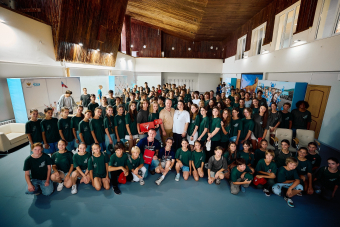
On July 28 and 29, 2026, the soloists of the Opera Company of the Primorsky Stage of the Mariinsky Theatre had a series of conversations with children on holiday at the Russian Children’s Center “Ocean”. Teenagers aged 14 to 17 who had come to the Far East from across the country took part in the discussions
On July 28 and 29, 2026, the soloists of the Opera Company of the Primorsky Stage of the Mariinsky Theatre had a series of conversations with children on holiday at the Russian Children’s Center “Ocean”. Teenagers aged 14 to 17 who had come to the Far East from across the country took part in the discussions.
While celebrating the 10th anniversary of the Primorsky Stage of the Mariinsky Theatre, the artists and musicians carry out an outreach campaign to tell audiences about the history of their unique Theatre in Vladivostok. Motivational meetings with teenagers and young people might discover a variety of professions and tell them about all of the professional features and nuances. The creative trends were unfolded by leading soloists of the Opera Company of the Primorsky Stage of the Mariinsky Theatre such as Laura Bustamante, Alexei Kostyuk, and Mingiyan Odzhaev.
The soloists told the audience about the profession of an opera singer and their careers in the world of music. The teenagers learned how to take classes in singing, how to further serve at theatres and what is behind an appearance on the world stage.
Each of the singers imparted his personal history of day-to-day self-cultivation or preparation for performances. The conversation turned out to be sincere and open, and the children asked a lot of questions about the Theatre and backstage life and were interested in the details of the opera profession.
The conversations with the opera singers gave the teenagers an opportunity to get acquainted with the rare and very difficult profession in which physiological data and a voice of great volume combine with a complicated vocal technique of performing works in different languages and dramatic acting mastery. Moreover, great attention was paid to the features of scenic life and the work experience of the unique Theatre in Vladivostok, which has obtained the status of the Primorsky Stage of the Mariinsky Theatre.
On the threshold of the opening of the new theatrical season, the Primorsky Stage of the Mariinsky Theatre and the National Centre “Russia” in the Primorsky Territory held a joint educational campaign which was dedicated to the 125th anniversary of the first performance of Nikolai Rimsky-Korsakov’s opera The Tale of Tsar Saltan. Within several days, the public could look at the familiar piece from different sides: through literature, the Russian language, music and theatrical art
On the threshold of the opening of the new theatrical season, the Primorsky Stage of the Mariinsky Theatre and the National Centre “Russia” in the Primorsky Territory held a joint educational campaign which was dedicated to the 125th anniversary of the first performance of Nikolai Rimsky-Korsakov’s opera The Tale of Tsar Saltan. Within several days, the public could look at the familiar piece from different sides: through literature, the Russian language, music and theatrical art.
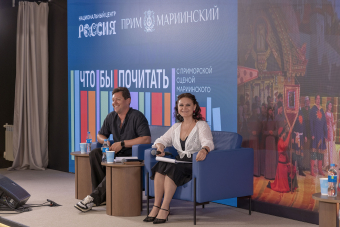
The first part of the joint program was an appearance of soloists of the Opera Company at the National Centre “Russia” in the Primorsky Territory. As part of the “What Should Be Read” project, the soloists of the Opera Company Alena Diyanova and Yevgeny Mizin unusually acted as reciters. They recited fragments from Pushkin’s fairytale and the opera libretto, and the art critic of the Primorsky Stage, Oleg Maryash, told the audience how the literary source had turned into a musical performance. The guests could hear the familiar texts in the artists’ reading to compare them with the respective opera fragments.
The program continued with a meeting at the Primorsky Stage. On July 26, 2026, before the performance of The Tale of Tsar Saltan, the guide of the National Centre “Russia” in the Primorsky Territory, Anna Nomakonova, gave a lecture on language features of Russian fairytales. The talk combined literature with history and features of Pushkin’s language with Rimsky-Korsakov’s musical heritage. In particular, the public learned about the composer’s sea voyages and a possible link between the Island of Buyan and Russky Island not far from Vladivostok.
The separate part of the program was a creative master class on Russian folklore. Children and adults could paint wooden figures and create their own souvenirs in the Russian folk style. Thus, the acquaintance with the performance went beyond the auditorium and continued in a creative format.
The Tale of Tsar Saltan has become a unifying thread in the two meetings which allowed the public to look at the opera as a literary text, a musical composition and a part of the national cultural tradition.
On July 25, 2026, the Primorsky Stage of the Mariinsky Theatre will memorably open the new theatrical season with Sergei Prokofiev’s grotesque opera The Love for Three Oranges brilliantly staged by Alexander Petrov
On July 25, 2026, the Primorsky Stage of the Mariinsky Theatre will memorably open the new theatrical season with Sergei Prokofiev’s grotesque opera The Love for Three Oranges brilliantly staged by Alexander Petrov.
On July 26, 2026, the Opera Company will present The Tale of Tsar Saltan by Nikolai Rimsky-Korsakov, one of the most favorite performances in the opera repertoire. Before the performance, the audience will be able to attend a lecture from the Scenic Introduction Project or a master class on wood painting, which will be given by specialists of the National Centre “Russia” in the Primorsky Territory. The lecture “The Language Affluence of The Tale of Tsar Saltan by A.S. Pushkin” is dedicated to language features of Pushkin’s tale and their expression in Nikolai Rimsky-Korsakov’s libretto. After the lecture, the audience is expected to attend the creative master class “Russian Folk Images”.
The season will continue with a series of opera performances of various musical styles and epochs, such as Pyotr Tchaikovsky’s Iolanta on July 31, 2026, Nikolai Rimsky-Korsakov’s The Tsar’s Bride on August 1, 2026, Giuseppe Verdi’s Il trovatore on August 2, 2026, La traviata on August 8, 2026, and Rigoletto on August 13, 2026, Wolfgang Amadeus Mozart’s Le nozze di Figaro on August 7, 2026, Georges Bizet’s Carmen on August 15, 2026, Gaetano Donizetti’s Don Pasquale on August 21, 2026, and Giacomo Puccini’s Tosca on August 28, 2026. The month will end with the operetta Die Fledermaus by Johann Strauss II on August 30, 2026.
The Mariinsky Orchestra of the Primorsky Stage will perform a big concert to celebrate the 270th anniversary of Wolfgang Amadeus Mozart’s birth on August 9, 2026. The concert programme will include both the Austrian composer’s well-known significant works and rarely performed ones.
The large-scale opera Mazepa by Pyotr Tchaikovsky will be performed in concert on August 23, 2026. In July, the opera soloists of the Primorsky Stage successfully performed its most complicated parts in Ilya Shlepyanov’s iconic production on the Historical Stage of the Mariinsky Theatre in Saint Petersburg. The singers were hard at work on the music material and honed their performing skills under the Artistic Director of the Opera Company Irina Soboleva.
On August 29, 2026, chamber music lovers are expected to attend the Portrait of a Singer in an Interior, which will be held by soprano Anastasiya Kikot, a soloist of the Opera Company of the Primorsky Stage, and tenor Azat Malik, a guest singer.
Meanwhile, the Ballet Company of the Primorsky Stage will go on their annual tour to Saint Petersburg where they will traditionally open the theatrical season with the best performances from their repertoire. This year, the tour programme includes Pyotr Tchaikovsky’s The Nutcracker, Adolphe Adam’s Le Corsaire and Giselle and the last season’s high-profile event – Romeo and Juliet choreographed by the Ballet Artistic Director Eldar Aliev.
At the Primorsky Stage, the company will open the season with the ballet A Thousand and One Nights on August 12, 2026. By now, the unique production, specially created for the Vladivostok Ballet Company, has become a pearl of the repertoire.
The ballet playbill in August embraces such classical and twentieth-century favorites as Rodion Shchedrin’s Konyok-Gorbunok (The Little Humpbacked Horse) on August 14, 2026, the ballet night Carmen Suite. Phaedra on August 16, 2026, Ludwig Minkus’s Don Quixote on August 20, 2026, the ballet night Les Noces. Petrouchka on August 22, 2026, and Pyotr Tchaikovsky’s Swan Lake on August 27 and 29, 2026.
At the Chamber Hall the favorite family performances will go on, such as Sergei Banevich’s Murych the Cat on August 22, 2026 at 12:00 and 14:30, Leonid Klinichev’s The Little Prince on August 29, 2026 at 12:00 and Town Musicians of Bremen on August 16, 2026 at 12:00 and 14:30.
On September 3, 2026, the famous pianist Denis Matsuev will appear at the Primorsky Stage as part of the cultural programme of the Eastern Economic Forum. His performance will be traditionally accompanied by the Russian National Youth Symphony Orchestra.
On September 19, 2026, the Pacific International Theatre Festival will open at the Primorsky Stage. It will host companies from Mongolia, South Africa, China, Colombia, Malaysia, India, Kazakhstan, Belarus, and Russia.
On July 16, 2026, the soloists of the Opera Company of the Primorsky Stage of the Mariinsky Theatre appeared on the Historical Stage in Saint Petersburg, performing the iconic opera Mazepa by Pyotr Ilyich Tchaikovsky
On July 16, 2026, the soloists of the Opera Company of the Primorsky Stage of the Mariinsky Theatre appeared on the Historical Stage in Saint Petersburg, performing the iconic opera Mazepa by Pyotr Ilyich Tchaikovsky.
The performance featured leading soloists of the Primorsky Stage, such as Laura Bustamante, Maria Tchaikovskaya, Evgeny Shagarov, Yevgeny Plekhanov, Azamat Malyshov, Alexei Kostyuk, and Ilya Astafurov. The Mariinsky Orchestra was under the baton of the Principal Conductor of the Primorsky Stage, Pavel Smelkov.
Mazepa, staged by Ilya Shlepyanov, is a large-scale historic canvas in which some of the events in the reign of Peter I are entwined with the characters’ dramatic destinies. The performance is marked by expressive scenic solutions, costumes and settings which form the atmosphere of the time of Peter the Great.
The performance is well known to spectators and members of the company. In the 2022/23 season, the opera was successfully included in the repertoire of the Primorsky Stage in Vladivostok. Under the Artistic Director of the Opera Company Irina Yurievna Soboleva, the soloists have made every effort to present Mazepa on the Historical Stage of the Mariinsky Theatre and to confirm their high level of performing skills and their deep mastery of the most complicated musical and dramatic opera materials.
The performance in Saint Petersburg anticipated the opening of the new theatrical season of the Primorsky Stage in Vladivostok. As far as August 23, 2026, Mazepa will again be performed in concert in Vladivostok.
Razmik Marukyan, Principal Dancer of the Primorsky Stage of the Mariinsky Theatre, won Third Prize and a bronze medal at the XV International Ballet Competition in Moscow. He competed in the Soloists section of the Senior Category
Razmik Marukyan, Principal Dancer of the Primorsky Stage of the Mariinsky Theatre, won Third Prize and a bronze medal at the XV International Ballet Competition in Moscow. He competed in the Soloists section of the Senior Category.
The International Ballet Competition in Moscow is one of the most prestigious ballet competitions in the world. Held every four years, it brings together on one stage the best young dancers from around the world. A successful performance opens good opportunities for talented dancers.
In 2026, 362 candidates from 35 countries submitted applications for participation in the Competition.